

Cold insulation is a critical component in low-temperature systems where maintaining sub-ambient conditions is essential for product integrity, energy efficiency, and system reliability. Unlike general thermal insulation used to retain heat, cold insulation focuses on preventing heat ingress, managing moisture migration, and minimizing condensation risks. Cellulose and fiberglass insulation are both widely known materials, but their suitability for cold insulation applications varies significantly when evaluated from an engineering standpoint.
Cold insulation systems operate under fundamentally different conditions compared to conventional building insulation. In cold environments, heat continuously flows from the warmer exterior toward the colder interior, placing constant stress on the insulation layer.
Effective cold insulation must meet several key requirements:
1. Low thermal conductivity to reduce heat gain
2. Moisture resistance to prevent performance degradation
3. Compatibility with vapor barriers to control condensation
4. Dimensional and performance stability under sustained low temperatures
Failure to meet these requirements can result in excessive energy consumption, condensation-related damage, and reduced service life of refrigeration systems.
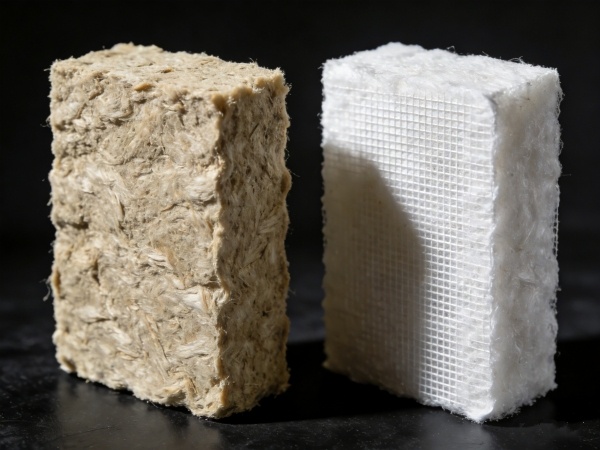
Cellulose insulation is typically made from recycled paper products treated with fire retardants. It has a dense, fibrous structure designed primarily for residential thermal insulation applications.
Fiberglass insulation consists of fine glass fibers arranged in batts, rolls, or loose-fill forms. Its structure traps air within the fibers, which contributes to its insulating properties.
From a cold insulation perspective, the key difference lies in material behavior under low-temperature and high-humidity conditions. Cellulose is hygroscopic, meaning it readily absorbs moisture, while fiberglass itself does not absorb water, although it can trap moisture if not properly protected.
Thermal conductivity is a primary indicator of insulation performance in cold environments. Both cellulose and fiberglass offer relatively low thermal conductivity under dry, controlled conditions.
However, in cold insulation systems, heat gain control must remain consistent over time. Fiberglass maintains stable thermal performance when paired with a properly installed vapor barrier, as its insulating properties are less affected by temperature fluctuations.
Cellulose insulation, while dense and effective in reducing air movement, can experience performance loss when exposed to moisture. Increased moisture content raises thermal conductivity, allowing more heat to penetrate the cold space and increasing refrigeration load.
Moisture control is one of the most critical challenges in cold insulation design. When warm, moist air comes into contact with cold surfaces, condensation is likely to occur.
Cellulose insulation readily absorbs moisture, which can lead to:
1. Reduced insulation effectiveness
2. Increased risk of mold growth
3. Material settling and structural degradation
Fiberglass does not absorb moisture, but it requires a continuous and well-sealed vapor barrier to prevent condensation within the insulation layer. When properly designed, fiberglass-based cold insulation systems offer better long-term resistance to condensation-related failures.
From a long-term cold insulation performance standpoint, fiberglass generally provides greater reliability in low-temperature applications. Its resistance to moisture absorption, stable thermal conductivity, and compatibility with engineered vapor barrier systems make it better suited for cold storage facilities, refrigeration pipelines, and cold chain infrastructure.
Cellulose insulation may perform adequately in controlled indoor environments, but its moisture sensitivity limits its effectiveness in true cold insulation systems where condensation risk is high and temperature differentials are significant.
For applications requiring durable, energy-efficient, and moisture-resistant cold insulation, fiberglass remains the more technically appropriate choice when properly installed and sealed.

Copyright ? 2025ZHEJIANG ZHENSHEN INSULATION TECHNOLOGY CORP.LTD. All rights reserved. 網(wǎng)站備案/許可證號:浙ICP備16010266號-1